
-
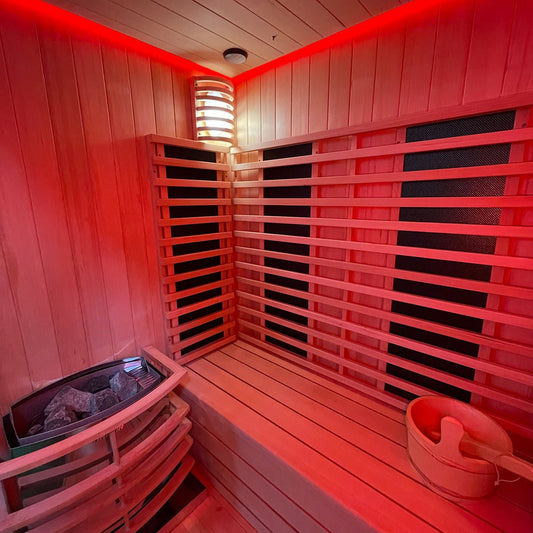
Insignia V2 Hybrid-Heating 4 Person Sauna Infrared & Electric Stove Sauna
Regular price From £6,995.00Regular price£6,995.00Sale price From £6,995.00 -
Insignia Hybrid Outdoor 2-Person Sauna - Infrared & Traditional Heater
Regular price From £5,595.00Regular price£5,695.00Sale price From £5,595.00Sale -
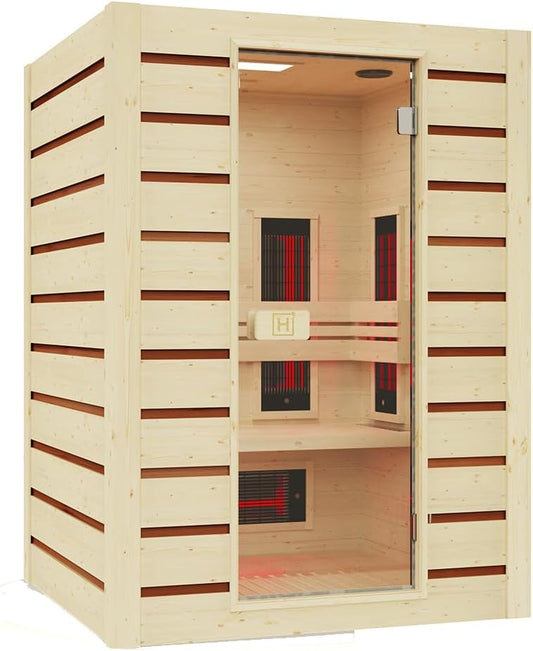
Hybrid 2 Person Indoor Sauna
Regular price £3,899.00Regular price£4,299.00Sale price £3,899.00Sale -
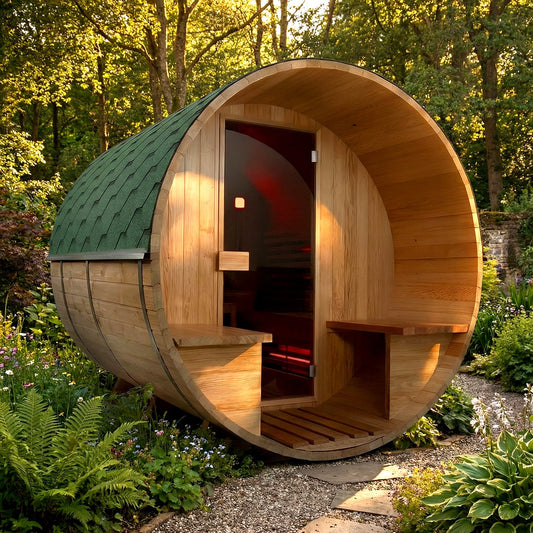
Insignia Hybrid Barrel Sauna with Porch – 2-3 Person
Regular price £9,795.00Regular price£9,995.00Sale price £9,795.00Sale -
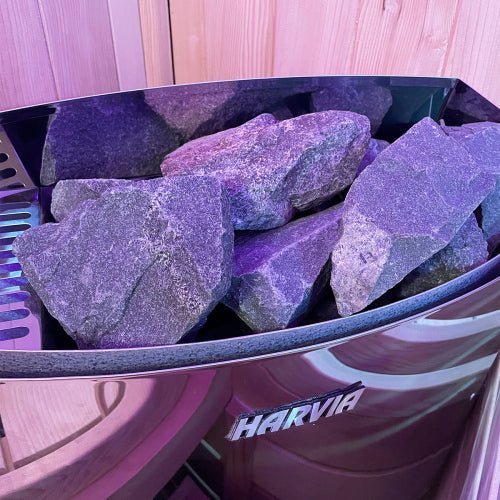
OKA Fusion Synergy 3 - Indoor Hybrid Sauna
Regular price £10,499.00Regular price£12,495.00Sale price £10,499.00Sale





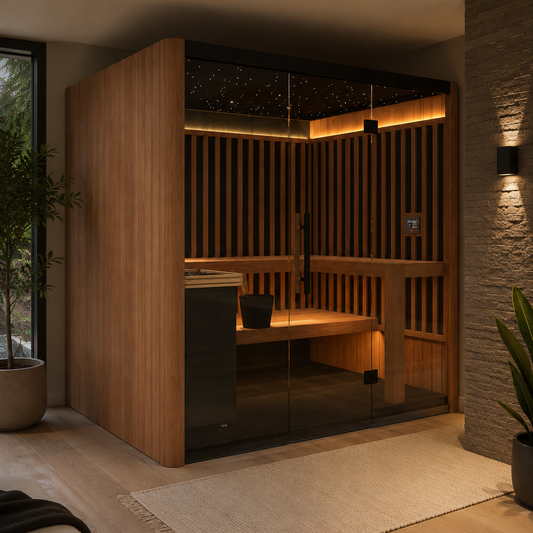
Collection: Hybrid Saunas
Traditional & Infrared in One Cabin from £5,695
A hybrid sauna gives you two saunas in one cabin: a traditional Finnish stove for high, steamy heat and the authentic löyly experience, plus far infrared panels for gentle, deep-reaching warmth at lower temperatures. Switch between them, or run both together — every session is yours to tailor. At Nuovo Luxury our hybrid range is UK-engineered, fully insulated for year-round outdoor use, and priced from £5,695.
Why a Hybrid Sauna?
It's the ideal choice when you can't decide between traditional and infrared, or when different people in your household prefer different kinds of heat. A hybrid removes the compromise and future-proofs your purchase as your preferences change. Want an authentic Finnish löyly session today and a gentler infrared recovery tomorrow? One cabin, two modes. Many owners find they actually use both — traditional for weekend sessions and infrared for daily 30-minute use.
Our Hybrid Sauna Range
Hybrid Outdoor 2-Person Sauna (£5,695) — our entry-level hybrid combining a traditional electric heater with infrared panels in a compact 2-person cabin. Perfect for couples or single regular users who want full hybrid flexibility without a large footprint.
V2 Hybrid-Heating 4 Person Sauna (£6,995) — a 4-person hybrid cabin with both an infrared panel array and a full traditional electric stove. Family-sized, garden-installable, and our most popular hybrid.
How to Choose a Hybrid Sauna
A few things worth weighing before you buy:
- Capacity & space: Measure your garden spot first. Our hybrids range from compact 2-person cabins to roomy 4-person models — leave clearance around the unit for airflow and access.
- Heat preference: If you love intense, steam-filled heat, you'll lean on the traditional stove. If you find high heat overwhelming or want longer, gentler sessions, the infrared side will become your favourite. Hybrids let you have both.
- Electrical supply: Traditional stoves typically need a 32-amp dedicated supply (occasionally three-phase for larger units). The infrared panels run on standard single-phase. Confirm your supply with an electrician before ordering.
- Features: Most of our hybrids include LED chromotherapy lighting, Bluetooth audio, and insulated construction for year-round UK use.
Once your sauna arrives, see our delivery & installation guide for everything about access, base preparation, and (for pre-assembled cabins) crane lifting. Need a hand choosing? Call our UK team on 0330 133 6617. For a full side-by-side comparison, read our Hybrid vs Infrared Sauna UK Guide.
Hybrid Sauna Running Costs
Running costs depend on which mode you use: infrared-only sessions cost roughly £0.40–£0.55, while a full traditional session on the electric stove runs about £2.52–£3.78 at 28p per kWh. Most owners mix the two — infrared daily, traditional at weekends — keeping average costs low. Model both modes with our Sauna Running Cost Calculator.
Frequently Asked Questions
What is a hybrid sauna?
A hybrid sauna combines two heating systems in a single cabin: a traditional Finnish electric stove (for high heat 80–95°C and steam from pouring water on stones) and far-infrared panels (for gentler 45–65°C deep tissue warmth). You can run either system independently or both at the same time, giving you full flexibility within one purchase.
Are hybrid saunas any good, or is it better to buy a traditional or infrared separately?
Hybrid saunas work genuinely well — the two systems don't interfere with each other and you get full performance from both. Buying separately costs significantly more (two cabins, two installations, double the garden footprint), so unless you have specific reasons to keep them separate, a quality hybrid is the more practical choice. The trade-off is slightly less specialised: a dedicated infrared cabin may have more advanced full-spectrum panels, and a dedicated traditional cabin may have a wood-burning option (rare in hybrids).
Can you use both heating modes at the same time in a hybrid sauna?
Yes — you can run the traditional stove and the infrared panels simultaneously. Some owners use this to get rapid heat-up from infrared while the traditional stove builds higher temperatures, then drop the infrared once the cabin reaches target heat. Others alternate between sessions — traditional first, then a gentler infrared cool-down.
How much does a hybrid sauna cost in the UK?
Hybrid saunas at Nuovo Luxury start from £5,695 for the Hybrid Outdoor 2-Person (an entry-level 2-person cabin with both heating systems) and reach £6,995 for the V2 Hybrid 4-Person Sauna (our family-sized hybrid with infrared and electric stove). Both are fully outdoor-rated and UK-engineered.
Can a hybrid sauna be used outdoors in the UK?
Yes — both our current hybrid models are designed for outdoor garden installation. They feature insulated walls and roofs, weather-resistant timber, and tempered glass doors for year-round UK use. As with any outdoor sauna, the electrical connection requires a qualified electrician and a 32-amp supply for the traditional heater element.
Do hybrid saunas use more electricity than infrared or traditional alone?
Energy usage depends on which heating mode you run. Using infrared only is the most economical (typically 1.5–2 kW for a session). Traditional electric stove use is higher (around 6–9 kW). Running both simultaneously naturally uses the most power. Most owners use infrared for daily sessions (low cost) and traditional for occasional intense sessions, keeping average running costs reasonable.
Do I need planning permission for a hybrid sauna in the UK?
Most domestic hybrid saunas fall under permitted development rights and do not require planning permission, provided they sit within your garden, don't exceed 2.5m in height (when within 2m of a boundary) or 3m elsewhere, and don't cover more than 50% of the garden. Listed properties and conservation areas have stricter rules — check with your local authority before buying.
